
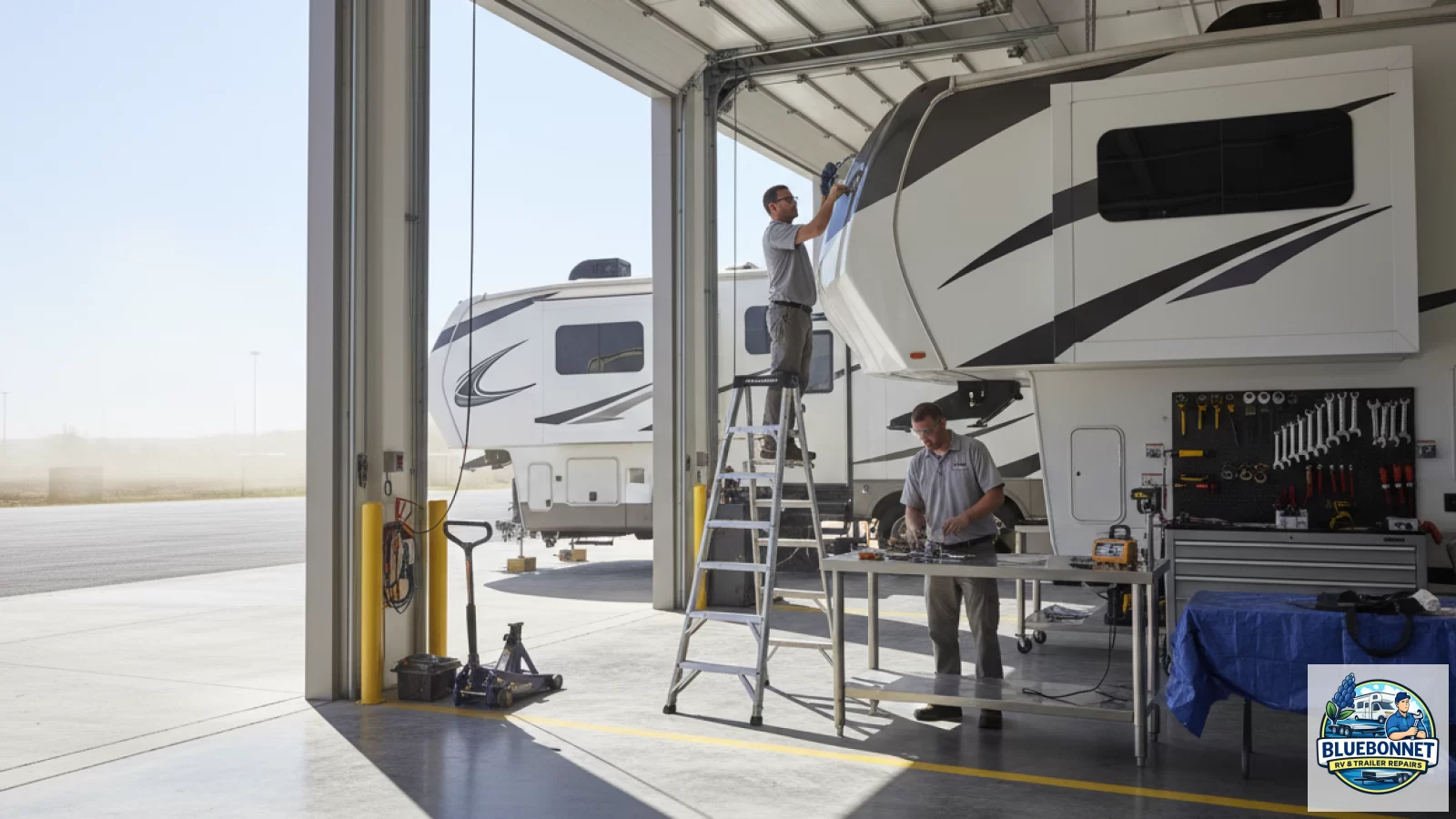
Mobile RV service is incredibly convenient—especially when your rig is parked at home, in storage, or at a campground. But some repairs are simply easier, safer, and more predictable when they’re done in protected service-center space. If you’re trying to decide which option to book, the best question isn’t “Which is cheaper?”—it’s “Which environment gives this repair the best chance of being done correctly?”
This guide explains when mobile service is a great fit, when a shop bay is usually preferred, and what details to share so BlueBonnet can recommend the right approach.
Mobile vs. service center: what actually changes
The repair itself may be the same, but the conditions are different. Protected service-center space can offer:
- Weather control (rain, wind, extreme heat, sudden storms)
- Better lighting and stable power for diagnostics and tool use
- More room and safer access for ladders, platforms, and multiple technicians
- Equipment and staging space for parts, materials, and multi-step work
- Containment for dusty demolition or wet-material removal
Mobile service is still a strong option for many jobs, and BlueBonnet can talk through what makes sense once you share a few details about your RV or trailer and what you’re seeing.
When mobile RV service is usually a good fit
Mobile service tends to work well when the job is:
- Short and straightforward (a single-visit repair)
- Not highly weather-sensitive
- Not equipment-intensive
- Accessible where the RV is parked (safe working space, level ground, adequate clearance)
Examples can include certain electrical diagnostics, minor adjustments, or smaller repairs where the work area is easy to reach and the materials don’t require long cure times in controlled conditions.
When protected service-center space is often preferred
Here are the most common situations where a shop environment is usually the better fit—not because mobile service can’t do the work, but because the conditions can make the outcome more reliable.
1) The repair is weather-sensitive (cure times, adhesives, sealants, coatings)
Many repair materials have temperature and humidity ranges where they perform best. Wind, surprise rain, or extreme heat can affect:
- Sealant adhesion and skin-over time
- Roof repair materials and tapes
- Flooring adhesives and subfloor bonding
- Drying and dehumidification plans for water intrusion
In protected space, the work can be staged so the repair isn’t rushed to beat the weather.
2) The job is multi-day or needs controlled drying
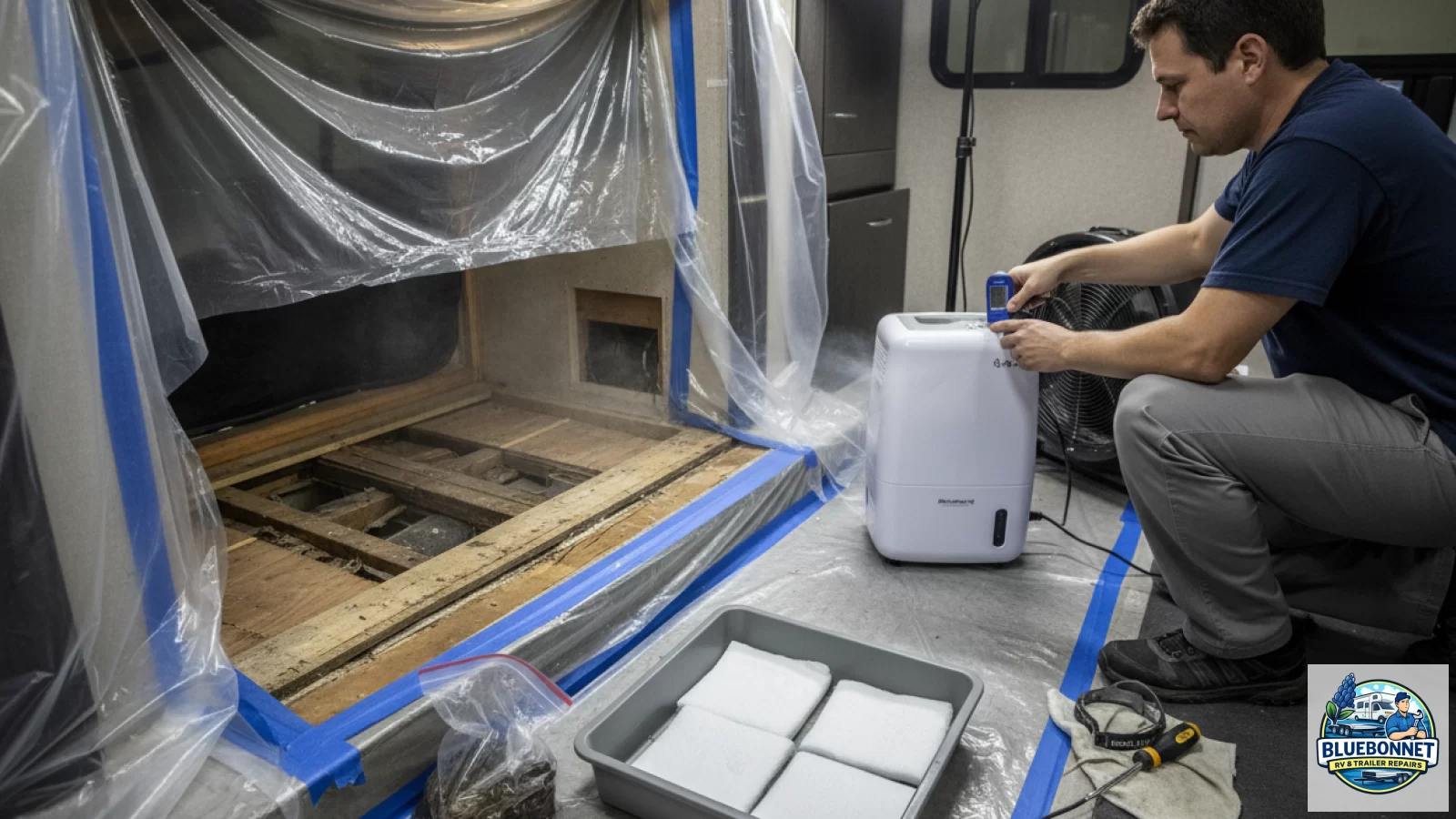
Water intrusion and soft-floor issues are a great example. A floor repair isn’t always just “replace the bad spot.” The first step is confirming what’s wet, how far it spread, and what structure is affected. BlueBonnet’s RV floor repair work often involves inspection, careful access, and a plan that may include drying time.
Protected service-center space helps because equipment like dehumidifiers and air movers can run consistently, and opened-up areas can stay clean and protected between work sessions.
3) The repair is equipment-intensive or needs safer access
Some repairs go better when the team has stable access and room to work. A service center can be preferred when the job needs:
- Stable platforms for roof-edge work
- Multiple tool carts and staged parts
- Heavy components moved in and out safely
- Better lighting for detailed inspection and reassembly
4) The work creates dust, debris, or needs containment
Any job involving demolition, cutting, or removing wet materials can get messy fast. In a shop bay, it’s easier to protect the RV interior, control debris, and keep the worksite safe and organized.
5) The RV’s parking situation makes mobile work risky or inefficient
Mobile service needs a safe setup. A shop is often preferred if the RV is parked where there’s:
- Uneven ground or limited clearance
- Soft soil or gravel that makes ladders unstable
- Low tree cover or tight storage rows
- Rules that restrict on-site repairs (some storage facilities and parks)
Why inspection matters (and why scope can change)
One important reality with water damage, soft floors, and structural concerns: hidden roof, floor, or structural damage can change after an approved controlled tear-down. Photos and surface symptoms are helpful, but they can’t fully show what’s happening inside layered assemblies.
That’s also a reason protected service-center space is sometimes preferred—it allows controlled access, cleaner staging, and a more predictable workflow if the repair plan needs to expand once the true condition is visible.
What BlueBonnet’s Rice service center is for (and what to expect)
If your repair is larger, weather-sensitive, equipment-intensive, or likely to take more than one visit, BlueBonnet’s Rice RV Service Center can be the better environment for the work.
The Rice location lease is active and move-in is underway. Until normal business hours and intake procedures are confirmed, customers should call before arrival.
Owner-friendly checklist: what to send so we can recommend mobile vs. shop
If you want the fastest, most accurate recommendation, send:
- Your RV/trailer year, make, and model
- What symptom you’re seeing (soft spot, leak stain, electrical issue, etc.)
- Where it’s located (inside and outside)
- Whether it’s time-sensitive (trip date, storage move, etc.)
- 3 5 photos (wide context + close-up)
- Where the RV is parked and any access limits (gate codes, tight rows, park rules)
A practical way to decide
If the job is small, accessible, and not weather-sensitive, mobile service may be the most convenient choice. If the job is likely to involve staged materials, controlled drying, multiple steps, or uncertain scope until inspection, protected service-center space is often the better fit.
Next step
Call (903) 804-6600 or email service@bluebonnetrvandtrailerrepair.com with a short description and a few photos. BlueBonnet can help you choose the right approach—mobile service when it makes sense, or the Rice service center when protected space gives the repair a better path to a clean, durable result.