
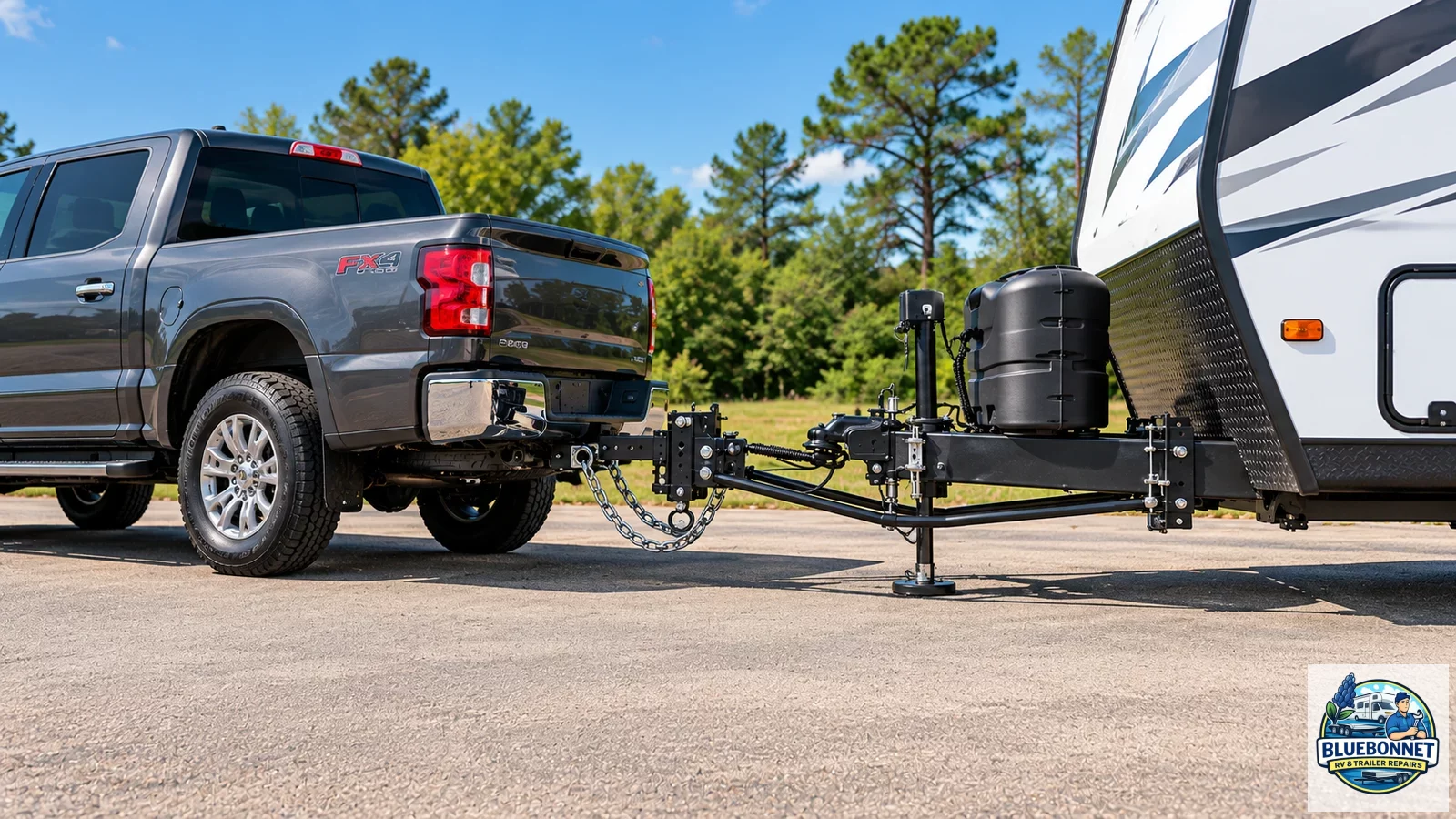
A weight-distribution hitch (WDH) can make towing feel dramatically more stable when it’s matched correctly and adjusted with real measurements—not guesses. But it’s also one of the easiest towing upgrades to get “almost right,” which can still leave you with porpoising, light steering, uneven braking feel, or a trailer that just doesn’t tow confidently.
This guide walks through what actually matters for weight-distribution hitch setup: fitment, baseline measurements, and the adjustment steps that change how the rig behaves. It’s written for travel trailer owners who want a clear, practical explanation before they buy, install, or schedule service.
What a weight-distribution hitch is (and what it is not)
A weight-distribution hitch uses spring-bar tension (or an equivalent mechanism, depending on the design) to help distribute some of the tongue weight across the tow vehicle and trailer axles. The goal is to improve overall balance so the tow vehicle isn’t excessively squatted in the rear and light in the front.
Important clarifications:
- It doesn’t increase your tow rating. Your truck/SUV and trailer still have limits (payload, axle ratings, hitch rating, tongue weight limits, and more).
- It’s not a cure-all for sway. Some WDH systems include sway control features, but a stable tow also depends on loading, tire condition/pressure, suspension condition, and correct hitch height.
- It’s not “set once forever.” Changes in trailer loading, cargo placement, or tow vehicle setup can require re-checking measurements.
Before you adjust anything: confirm the hitch is the right fit
WDH setup starts with fitment. If the hitch is mismatched to your trailer and tow vehicle, adjustments can only do so much.
Key fitment items to verify
- Trailer coupler size and hitch ball size (they must match).
- Tongue weight range the WDH is designed for (not just trailer GVWR).
- Receiver and shank ratings (weight-distribution ratings are different than weight-carrying ratings).
- Clearance for turning (spring bars, brackets, chains, jack, propane tray, battery boxes, etc.).
- Trailer frame compatibility with the bracket style used by the hitch.
If you’re unsure whether your current hitch is properly sized for your real-world tongue weight, it’s worth checking before you chase adjustments.
Baseline measurements that make setup objective (not opinion-based)
Most “my WDH doesn’t feel right” problems come back to skipping baseline measurements. You want a starting point you can return to.
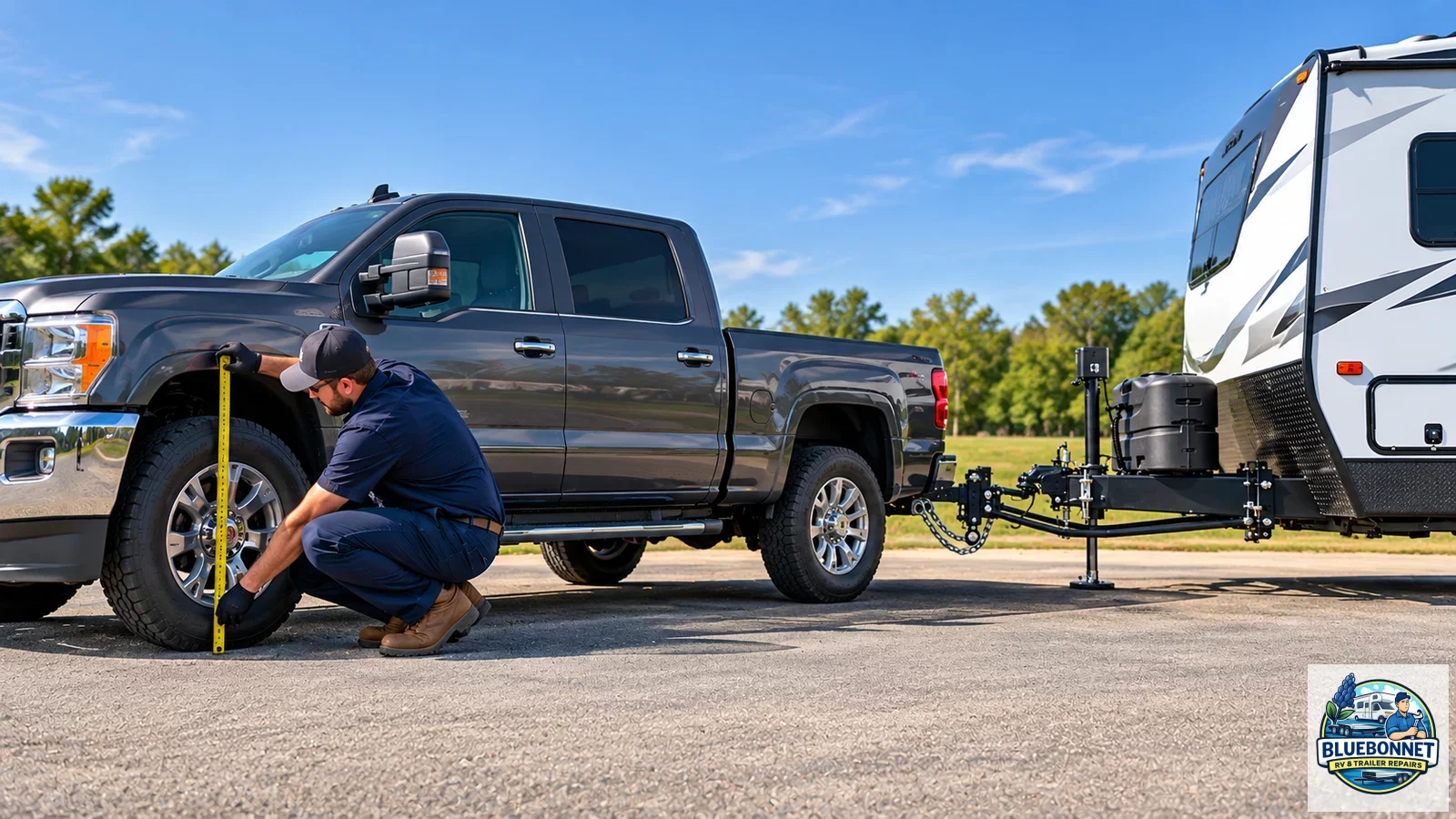
1) Measure tow vehicle fender heights (unhitched)
On level ground, measure from the ground to a consistent point on the front and rear fender (or wheel arch) of the tow vehicle. Write it down.
2) Measure coupler height (trailer level)
Level the trailer (use a level on the frame or inside on a flat surface) and measure from the ground to the bottom of the coupler. This helps you choose a starting hitch-ball height.
3) Measure tow vehicle fender heights (hitched, no distribution engaged)
Hitch the trailer to the ball but do not engage the spring bars/tension yet. Measure front and rear fender heights again. This shows how much the trailer’s tongue weight is squatting the rear and unloading the front.
4) Measure again with weight distribution engaged
After engaging the WDH, measure front and rear fender heights again. Your goal is typically to restore balance so the front axle isn’t excessively light and the rig sits level enough to tow predictably.
Why this matters: without these measurements, adjustments become guesswork. With them, you can tell if a change improved balance or made it worse.
Hitch height: the foundation for everything else
If the hitch head is too high or too low, you can end up using spring-bar tension to “force” the rig level, which can create other issues.
Common symptoms of incorrect hitch height include:
- Nose-high trailer: can feel floaty, may contribute to sway, and can affect braking feel.
- Nose-low trailer: can overload the front of the trailer and change how bumps and dips feel.
Start by setting ball height based on your level-trailer coupler measurement, then fine-tune after you check how the rig sits when hitched.
Spring-bar tension: what you’re actually adjusting
On many common WDH designs, you change tension by adjusting:
- The number of chain links under tension (chain-style setups)
- Bracket position and engagement point
- Hitch head angle (tilt) using washers/spacers or angle settings
More tension is not automatically better. Too much tension can create a harsh ride, stress components, and change handling in ways you don’t want.
Signs you may have too little tension
- Rear of the tow vehicle still squats significantly
- Steering feels light or vague
- Headlights point noticeably upward
- Porpoising (bouncing) feels worse than expected
Signs you may have too much tension
- Ride feels overly stiff or “jarring” over bumps
- Front end feels unnaturally planted but the rig feels twitchy
- Hardware binds during turns or makes unusual noises
- Clearance issues appear at brackets or spring bars
Adjustment steps that owners commonly miss
These are the details that often separate a “pretty good” setup from a confident one.
Re-check trailer loading before you chase hitch adjustments
If your trailer’s cargo load shifts (fresh water, gear in the front pass-through, bikes on the back, generators, etc.), tongue weight can change. That can make a previously good setup feel wrong.
Confirm tire condition and pressure (tow vehicle and trailer)
Tires are part of the towing system. Underinflation, uneven wear, or mismatched tires can mimic hitch problems and contribute to sway or wandering.
Verify bracket placement and hardware torque
WDH components need to be installed correctly and tightened to specification for the design you’re using. Loose or mispositioned hardware can change tension, create noise, and reduce stability.
Check turning clearance and articulation
Even if the rig looks fine in a straight line, you need to confirm the spring bars and brackets have safe clearance during tight turns, driveways, and uneven terrain. Clearance issues can damage components or limit safe maneuvering.
When it’s smart to get professional help
If you’re experiencing persistent sway, unusual handling, or you can’t get consistent measurements after adjustments, it’s worth having the full setup evaluated. Sometimes the issue isn’t the WDH adjustment itself—it’s hitch fitment, trailer loading, receiver rating limitations, or another towing-system factor.
Also, if any towing-related hardware shows wear, damage, or deformation, stop towing and have it inspected.
How BlueBonnet can help with towing setup
BlueBonnet RV & Trailer Repairs can help with weight-distribution hitch setup, adjustment, and overall tow setup planning so you’re not relying on trial-and-error.
To learn more about the service pages related to this topic:
Practical next step
If you want help dialing in your setup, send the basics first: tow vehicle year/make/model, trailer type and approximate loaded condition, the hitch brand/model (if known), and a few photos of the coupler and hitch head area. Then request service so a tech can advise the right next step.
Request service (include photos and towing details)