
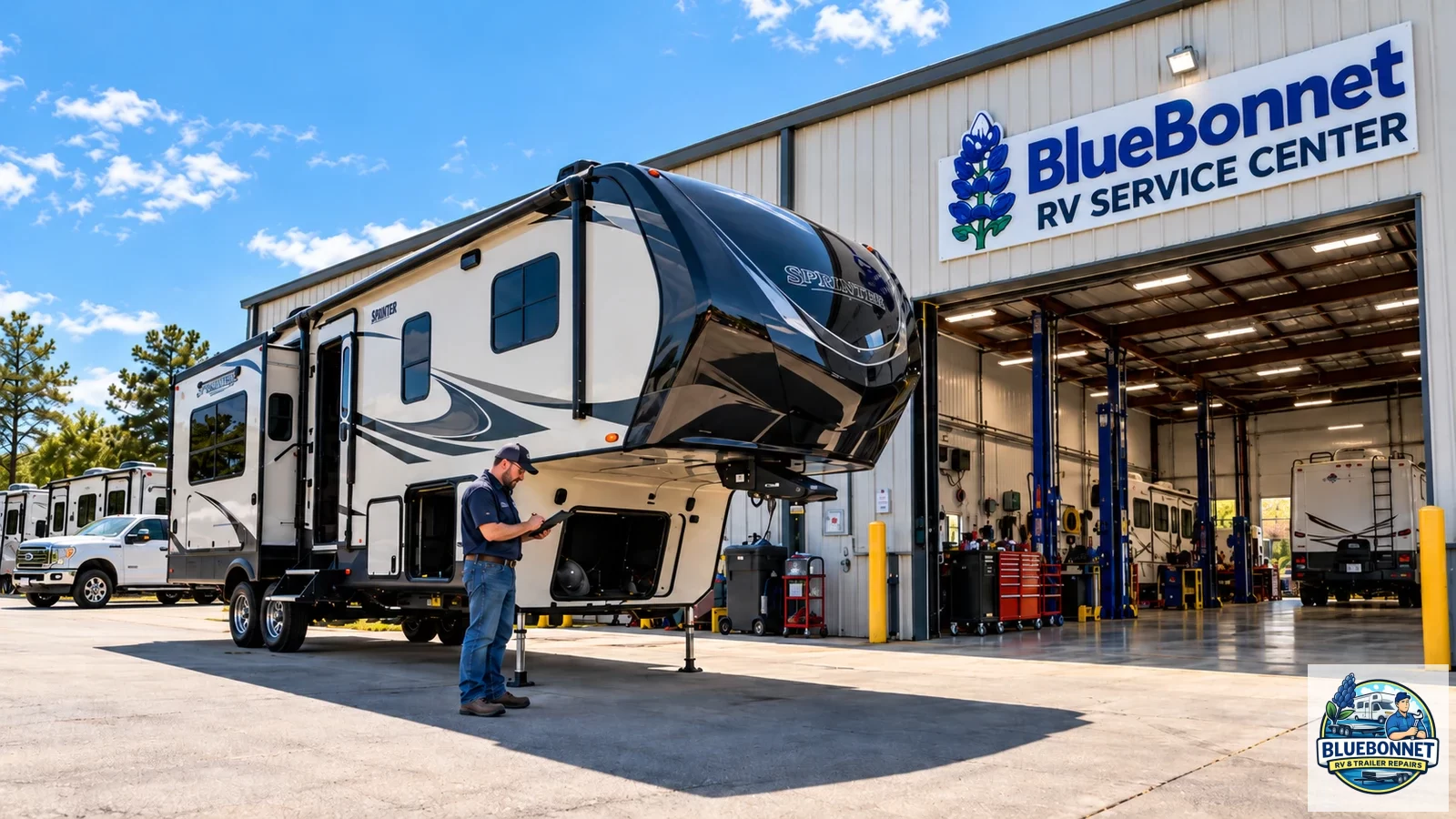
A major RV repair is easier to plan when the first conversation starts with the right information. Roof rebuilds, soft-floor repairs, water-damage work, structural repairs and other larger jobs often need more than a quick description of the symptom. The RV itself, the damaged area, access, weather, the amount of tear-down involved and what is found underneath can all affect how the work should be scheduled.
BlueBonnet’s Rice RV Service Center gives larger repairs a protected shop option while mobile service remains available when the job and conditions make that practical. The shop is at 2420 SW McKinney St in Rice, Texas. Move-in is still underway, so customers should call before bringing an RV to confirm current access and scheduling.
Start by sending the problem, not just the repair you think it needs
If a floor feels soft, a roof is leaking, a wall has staining or a slide area looks damaged, it is useful to describe exactly what you are seeing before deciding what the repair must be. A symptom can point toward several different repair paths, and photos or a phone description cannot always show how far damage has traveled inside layered RV construction.
For the first service request, send the basics:
- RV year, make and model
- RV type and approximate size
- Where the problem is located
- What you can see, feel or smell
- When the symptom first appeared and whether it is getting worse
- Any previous repairs in the same area
- Wide photos that show the surrounding area
- Close-up photos of the visible damage
- Your current location and whether the RV can be moved safely
The goal is not to diagnose the entire job from a message. Good information helps BlueBonnet decide what should be inspected first and whether the initial appointment is better handled mobile or at Rice.
Why some major repairs are better suited to protected shop space
BlueBonnet can consider the full service catalog for mobile work when travel, access, weather and the repair scope allow. The Rice shop becomes especially useful when a project benefits from protected workspace, more room around the RV, extended tear-down space or a multi-day repair process.
That commonly includes larger roof, floor, water-damage and structural jobs. It does not mean every major repair automatically has to go to the shop. The better location depends on the RV, the work, the site conditions and the approved repair plan.
This is also different from simply choosing between “mobile” and “shop” as a preference. A repair that begins with a small visible symptom may become more involved after inspection, while another problem that looks extensive in a photo may turn out to be more localized.
What happens before the repair is fully scoped
For major damage, the first step is usually to identify what can be confirmed without unnecessarily opening the RV. A technician may document visible damage, check adjacent materials, look for likely water-entry points and determine whether the affected area appears isolated or connected to a larger problem.
At that stage, there are usually three categories of information:
- Confirmed: damage that can be directly seen or verified.
- Suspected: hidden damage suggested by stains, softness, movement, delamination or the path of water intrusion.
- Unknown until opened: the condition of decking, framing, insulation, subfloor or other covered materials.
That distinction matters because major repair planning should not treat hidden construction as if it has already been seen.
Why the repair scope can change after approved tear-down
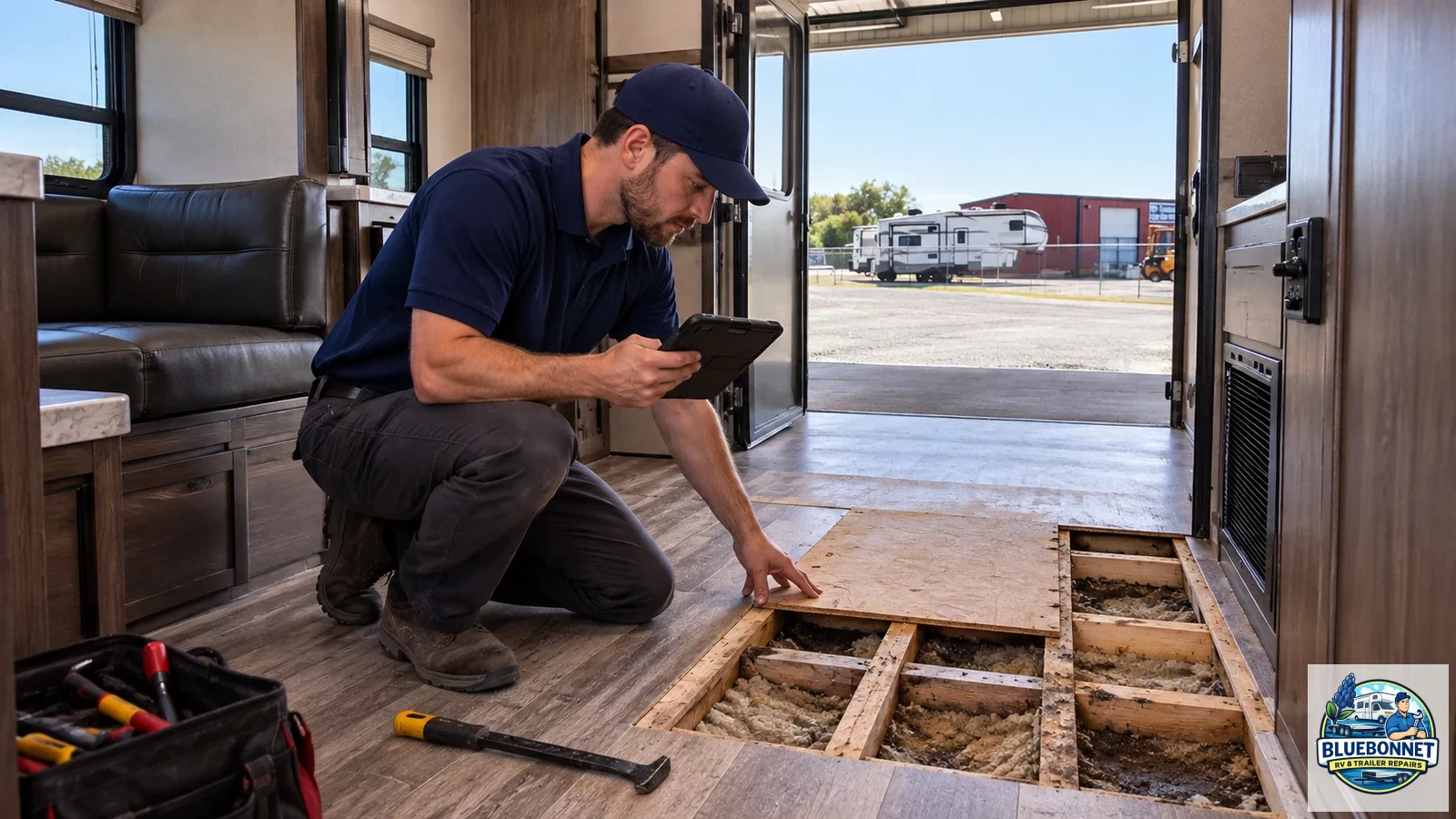
RV roofs, walls and floors are layered assemblies. Water can enter at one point, migrate through framing or insulation and appear somewhere else. A soft floor can extend farther under cabinets or walls than the visible spot suggests. A roof leak can affect decking or structure beneath membrane that still looks acceptable from above.
If BlueBonnet recommends a controlled tear-down, the purpose is to expose enough of the affected area to determine what is actually damaged. The repair plan may become smaller, larger or simply more specific once those materials are visible.
For structural damage in particular, BlueBonnet’s RV structural repair work is inspection-led because the visible symptom does not always define the complete repair. A responsible scope separates what is known before opening the area from what can only be confirmed afterward.
What approval should happen before major work moves forward
A major repair should not depend on assumptions about hidden damage. Before work progresses, the useful questions are:
- What damage has been confirmed?
- What work is currently recommended?
- What still cannot be known without opening the affected area?
- What could cause the scope to change?
- Does the RV need protected shop space for the next stage?
This is also why BlueBonnet does not need to promise a fixed outcome from a photo. Photos are useful for triage and preparation, but they are not a substitute for inspection when the repair involves concealed roof, wall, floor or structural materials.
What to expect when bringing the RV to Rice
The Rice location is being set up as a protected service-center path for major repairs and installation work while mobile appointments continue across the service area. Because move-in is still underway, do not treat the location as an unrestricted walk-in shop. Call first so BlueBonnet can confirm current access, scheduling and whether the Rice location is the right setup for your particular job.
When shop scheduling is confirmed, arrive with the RV reasonably accessible for inspection. Remove personal items from the immediate repair area when practical, and make sure BlueBonnet knows about any previous repairs, active leaks, electrical concerns or areas you believe may be unsafe to walk on or move around.
If the RV cannot be moved safely, say that when requesting service. That may change the first step and whether mobile evaluation should happen before shop scheduling.
How to make the first appointment more productive
You do not need a perfect diagnosis before contacting BlueBonnet. You do need enough information to show what is happening.
A useful request usually includes one wide exterior photo, one or two close-ups of the problem area, interior photos when there is visible staining or damage, and a short description of when the symptom appears. If the issue involves a leak, note whether it happens during rain, after travel, while an appliance is running or under some other repeatable condition.
For floor or structural problems, avoid repeatedly loading or walking on an area that feels weak just to demonstrate the symptom. If the structure may be compromised, let the inspection determine the safe next step.
The practical next step
If you are planning a larger RV repair, start by sending BlueBonnet the RV details, the symptoms, your location and several clear photos. BlueBonnet can then determine whether the first step should be mobile, at the Rice service center or an inspection that helps define the repair before a larger appointment is scheduled.
Request service or call (903) 804-6600. If the Rice shop is being considered, call before arrival while move-in and normal intake procedures are still being finalized.