
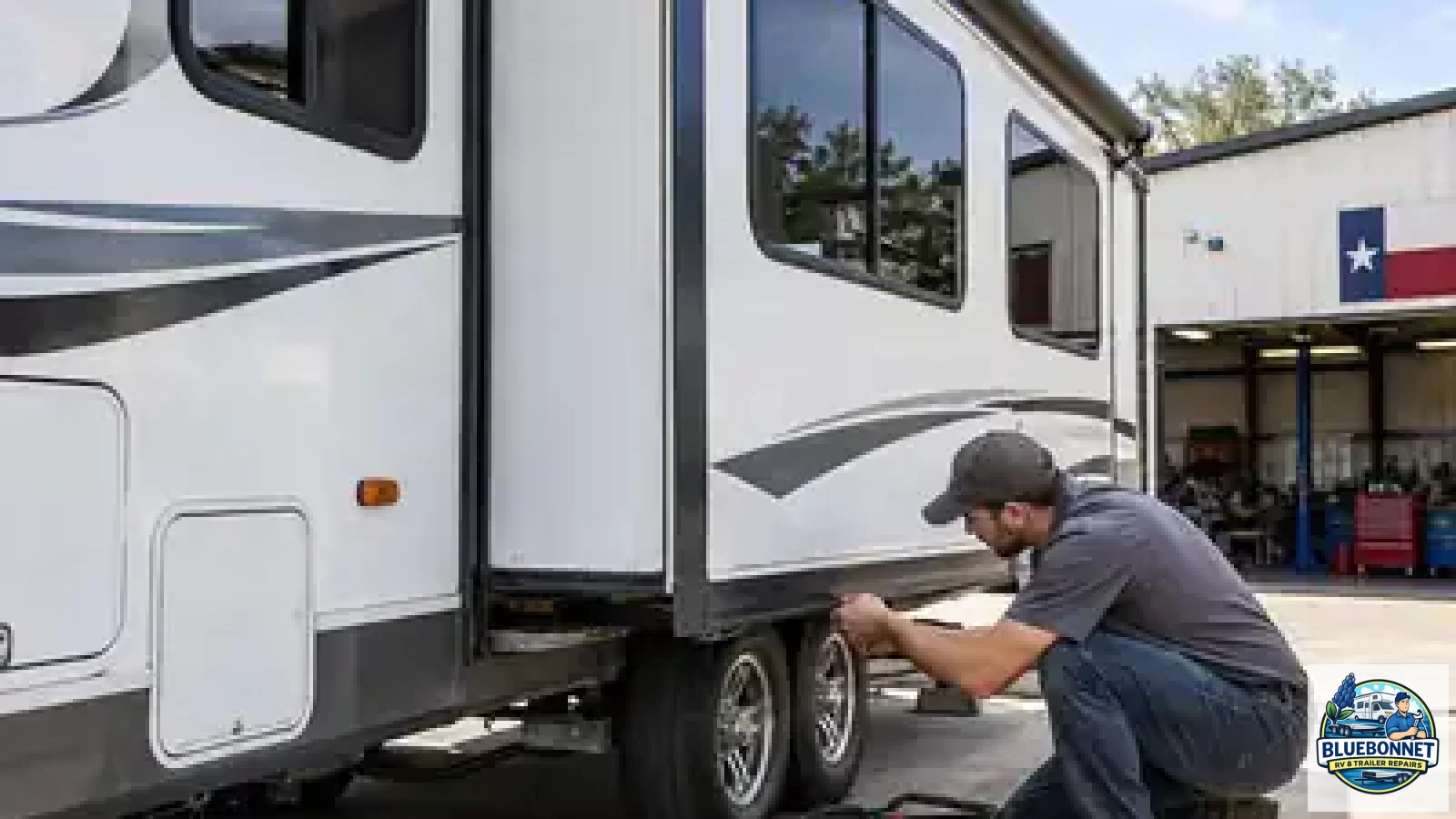
Few RV problems get your attention as quickly as a slide-out that refuses to move. Maybe it will not extend when you arrive at the campground. Maybe it starts moving and stops halfway. It might retract unevenly, make a grinding or clicking noise, or appear closed while leaving a gap large enough to let water inside.
Some slide-out problems have surprisingly simple causes. Others are signs of mechanical, electrical, structural, or water-damage issues that should be inspected before the system is operated again. BlueBonnet provides RV slide-out repair for problems ranging from adjustment and seals to drive-system and structural concerns.
Start with the simple things
Before assuming the slide mechanism has failed, check the basics. Depending on the RV, the slide-out system may require adequate battery voltage, the parking brake to be engaged, the ignition to be in a particular position, a slide-out enable or safety switch to be activated, certain doors or compartments to be closed, or a functioning fuse or circuit breaker.
Low voltage is especially important. An RV may still have enough power for lights and other accessories while voltage drops too far under load to operate a slide motor reliably. A struggling motor, clicking relay, or slide that moves only a few inches can sometimes be the first obvious symptom.
Repeatedly pressing the switch when the slide is struggling can turn a smaller problem into a damaged motor, gear, cable, or mounting component.
Why does my RV slide-out start moving and then stop?
A slide that begins moving but stops partway can have several causes. Electrical issues may include a weak battery, poor connection, failing motor, control module problem, damaged wiring, or excessive voltage drop.
Mechanical resistance can also cause the system to stop. Something as simple as debris in the mechanism may interfere with movement, but binding can also result from worn components, poor adjustment, damaged rollers, bent hardware, or a slide that is no longer traveling squarely in the opening.
If one side moves noticeably faster than the other, stop operating it until the cause is identified. Forcing an uneven slide can increase the amount of damage.
Why is one side of the slide-out moving but the other isn't?
Different RVs use different slide systems, including rack-and-pinion mechanisms, cable systems, hydraulic systems, and synchronized electric systems. When one side gets ahead of the other, possible causes can include synchronization problems, worn or damaged gears, motor problems, cable adjustment or damage, broken mounting hardware, obstruction or binding, or structural movement.
The slide room itself also needs to remain properly positioned in the RV opening. A technician should determine whether the problem is simply an adjustment issue or whether something has shifted, worn, or failed.
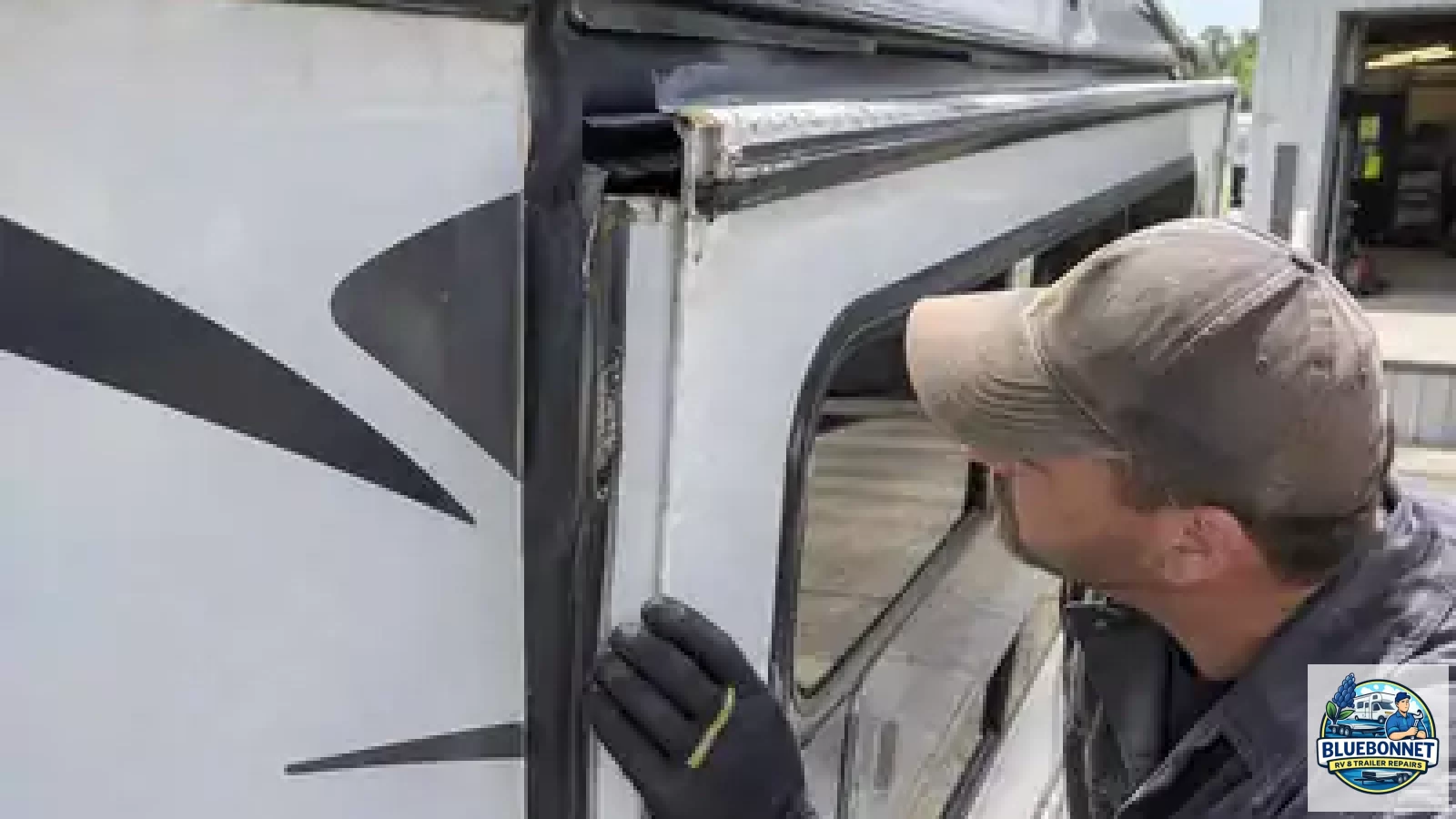
Clicking, grinding or popping noises
A slide-out should not be ignored when it begins making noises it did not make before. A clicking sound may point toward an electrical or drive-system problem. Grinding can indicate damaged gears or components operating under excessive resistance. Popping or movement accompanied by visible flexing deserves particular attention.
If the noise suddenly appears and the slide's movement changes at the same time, stopping and having the system inspected is usually less expensive than waiting for a complete failure.
The slide works, but it doesn't close evenly
A slide-out can technically work while still having a problem. When retracted, look at how the room sits against the RV. Warning signs include one corner sitting farther out than the others, uneven pressure against the seals, a visible gap, a slide that appears crooked, one side contacting the RV before the other, seals folding incorrectly, or new rubbing and scrape marks.
An unevenly seated slide can become more than an inconvenience. If the seal is not making proper contact, rainwater can enter around the opening and eventually affect wall materials, flooring, and structural components.
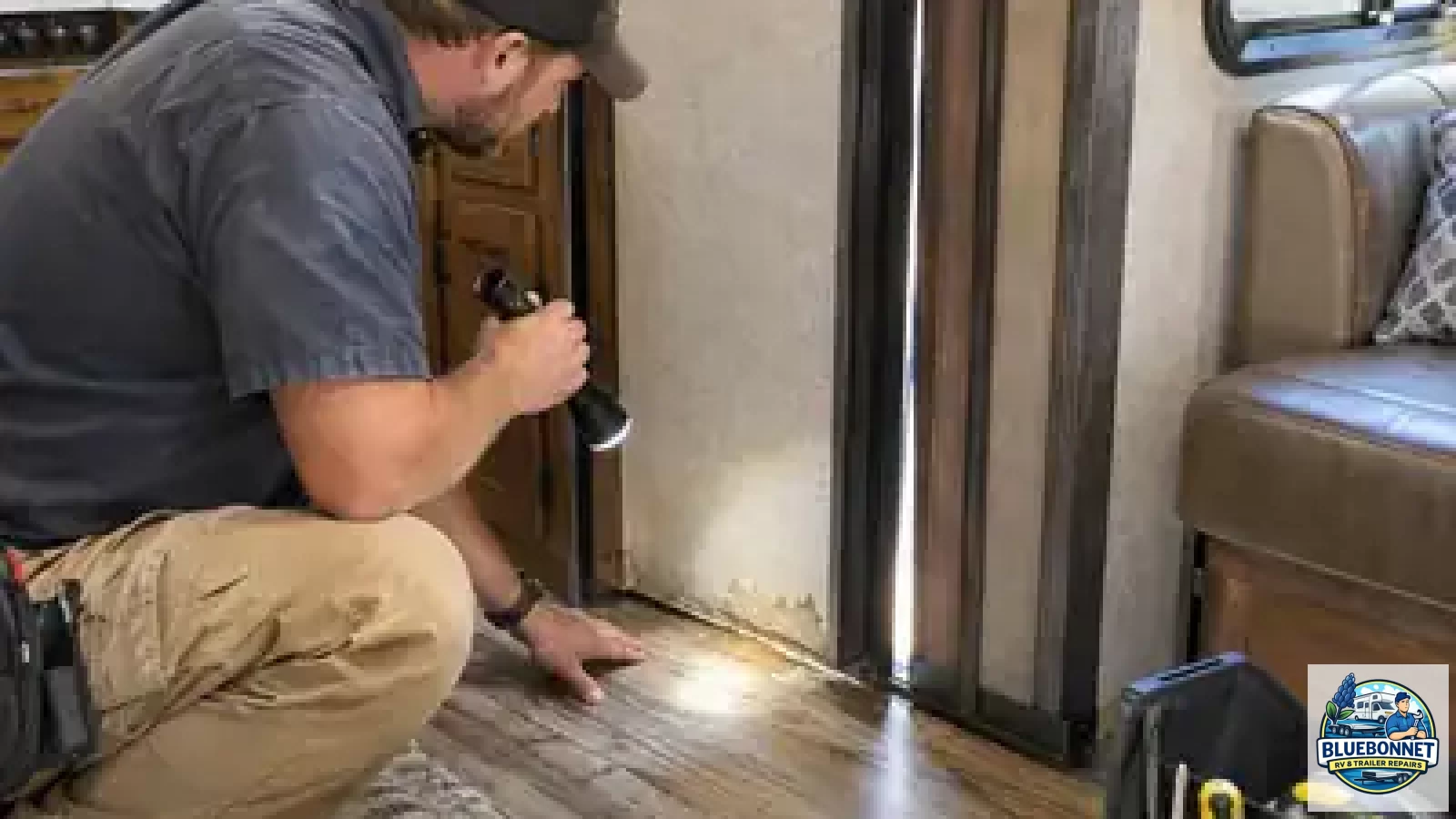
Water damage around a slide-out can be the bigger problem
Slide-out repairs are not always about the motor or mechanism. Water intrusion around a slide can affect the floor beneath the room, surrounding wall structure, seals, and mounting areas.
Warning signs include soft flooring near the slide, discoloration, swollen wood or wall material, musty odors, water stains, damaged or separated trim, loose flooring, and visible gaps around the slide opening.
If a slide is sagging or repeatedly losing adjustment, the mechanism itself may not be the only thing that needs inspection. The structure supporting it matters too. BlueBonnet's RV floor repair work often begins by determining how far moisture or soft material extends beyond the obvious spot.
Can you manually retract an RV slide-out?
Many RV slide systems have some form of emergency or manual procedure, but there is no universal method. The correct procedure depends on the manufacturer and type of slide mechanism.
Before attempting to manually retract a failed slide, check the RV and slide-system manufacturer's instructions. Using the wrong procedure or forcing a system against a mechanical obstruction can cause additional damage. If the slide is crooked, jammed, or making severe grinding noises, forcing it closed is especially risky.
When should you stop troubleshooting?
Basic checks such as battery condition, breakers, fuses, and obvious obstructions make sense for most RV owners. It is probably time for a professional inspection when:
- The slide moves unevenly.
- One side does not move.
- It repeatedly blows a fuse.
- The motor runs but the slide does not move.
- You hear grinding or popping.
- The slide will not seal when closed.
- The room appears to sag.
- Water damage is visible.
- Components are bent or broken.
- The same problem keeps returning after adjustment.
Those symptoms can involve the drive system, electrical system, structural mounting, or multiple issues at once.
Don't wait until the slide is completely stuck
A slide-out that is beginning to operate differently is often giving you a warning. Slower movement, unusual noises, uneven travel, or a new gap around the seal may appear before the system stops working altogether.
Catching the problem early can also make diagnosis easier because the technician can see how the system behaves before a component completely fails. That matters even more if you are preparing for a trip: a slide that barely works in the driveway can become a much bigger problem several hours from home.
RV slide-out repair in Texas
BlueBonnet RV & Trailer Repair diagnoses and repairs RV slide-out problems along with structural, flooring, roof, electrical, and other RV repair needs. For larger repairs that benefit from protected shop space, the Rice Service Center provides another service option in addition to mobile work.
If your RV slide-out is moving unevenly, making unusual noises, failing to extend or retract, or no longer sealing correctly, it is worth having the complete system inspected instead of repeatedly forcing it to operate. A slide-out problem may begin with a switch, motor, or adjustment, but the goal is to find why the problem is happening before it causes additional damage.
Request service or call (903) 804-6600 to schedule an RV slide-out inspection or repair.