
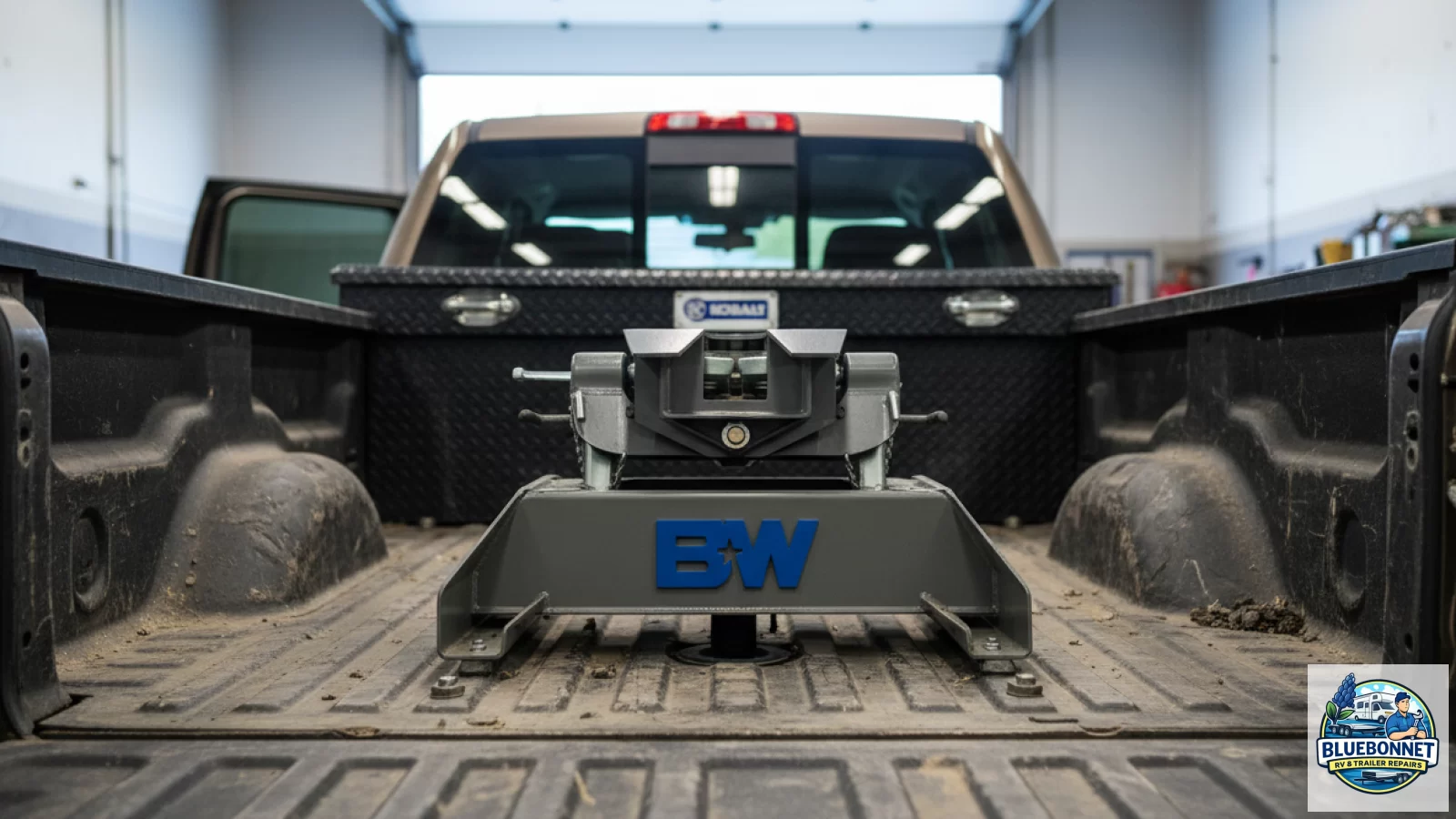
Choosing between a fifth-wheel hitch and a gooseneck hitch isn’t just a preference thing—it changes how your truck carries weight, how much bed space you keep, and how stable everything feels when you’re towing. If you answer a few practical questions up front, you’ll avoid the most common regrets we see after an install.
Start with what you’re actually towing
Fifth-wheel trailers are designed to connect to a fifth-wheel hitch head in the bed. They’re common for larger RVs because the hitch design spreads load well and typically feels very stable.
Gooseneck trailers use a coupler that drops onto a 2-5/16" ball in the bed. This is common for livestock, flatbed, and equipment trailers, and it can be a very clean setup when you want an under-bed system.
If you’re shopping trailers, confirm the coupler type before you buy hardware. If you already own the trailer, your coupler type usually decides the hitch style—unless you’re considering a conversion (which has its own pros/cons and warranty considerations).
What truck are you installing into?
Truck details matter more than most people expect. Before you commit to an install, verify:
- Bed length (short bed vs long bed affects turning clearance)
- Bed construction (aluminum vs steel can change hardware requirements)
- Payload rating and rear axle rating
- Existing bed accessories (toolboxes, bed covers, liners)
A hitch can be “rated high enough” and still be a poor match if it forces awkward positioning, interferes with bed accessories, or reduces turning clearance.
How important is turning clearance for your setup?
This is one of the biggest real-world differences.
Fifth-wheel towing often involves tighter turns in campgrounds and fuel stations. Short-bed trucks may need a slider hitch or a rotating pin box setup depending on trailer front cap shape and cab clearance. The goal is avoiding contact between the trailer and the truck cab during sharp turns.
Gooseneck setups can also turn tightly, but the trailer neck geometry and coupler height matter. If you’re towing a tall-neck trailer, you’ll want to confirm you have good bed-rail clearance and that the trailer rides level.
How much bed space do you want to keep?
If you use your truck bed daily, this question matters.
- Many fifth-wheel hitches are larger assemblies that take up space and weight in the bed. Some are removable, but they’re still bulky.
- Under-bed gooseneck systems can leave the bed relatively open when you’re not towing—often just the ball and safety-chain loops visible.
For customers who want the cleanest bed when not towing, an under-bed gooseneck setup is often the simplest “work truck” solution.
Are your ratings and match-ups correct?
Don’t stop at “the hitch is rated for 25K.” You want the entire system to match:
- Trailer GVWR and expected loaded weight
- Pin weight / tongue weight (this affects payload fast)
- Truck payload and rear axle rating
- Hitch rating and ball/coupler rating
We regularly see customers with enough engine to pull the trailer, but not enough payload to carry the pin weight safely. That’s where handling and braking issues start.
What does a “good install” look like?
Regardless of style, a proper install should look and feel like it belongs there—no sketchy spacers, no odd bed deformation, and no hardware that interferes with wiring, fuel lines, or structural members.
For a fifth-wheel hitch, that means the rails/pucks and hitch head are aligned, torqued correctly, and positioned for proper cab clearance and trailer level.
If you’re planning a fifth-wheel setup, BlueBonnet’s fifth-wheel hitch installation service focuses on correct fitment, torque, and real-world towing geometry—not just “bolting it in.”
Gooseneck specifics: ball position and safety-chain anchors matter
A gooseneck ball should visually and mechanically sit in the correct towing zone—generally over or slightly forward of the rear axle—so the truck carries the load the way it was designed to. Safety-chain anchors should be real U-bolt loops, properly spaced and anchored below the bed, not decorative caps.
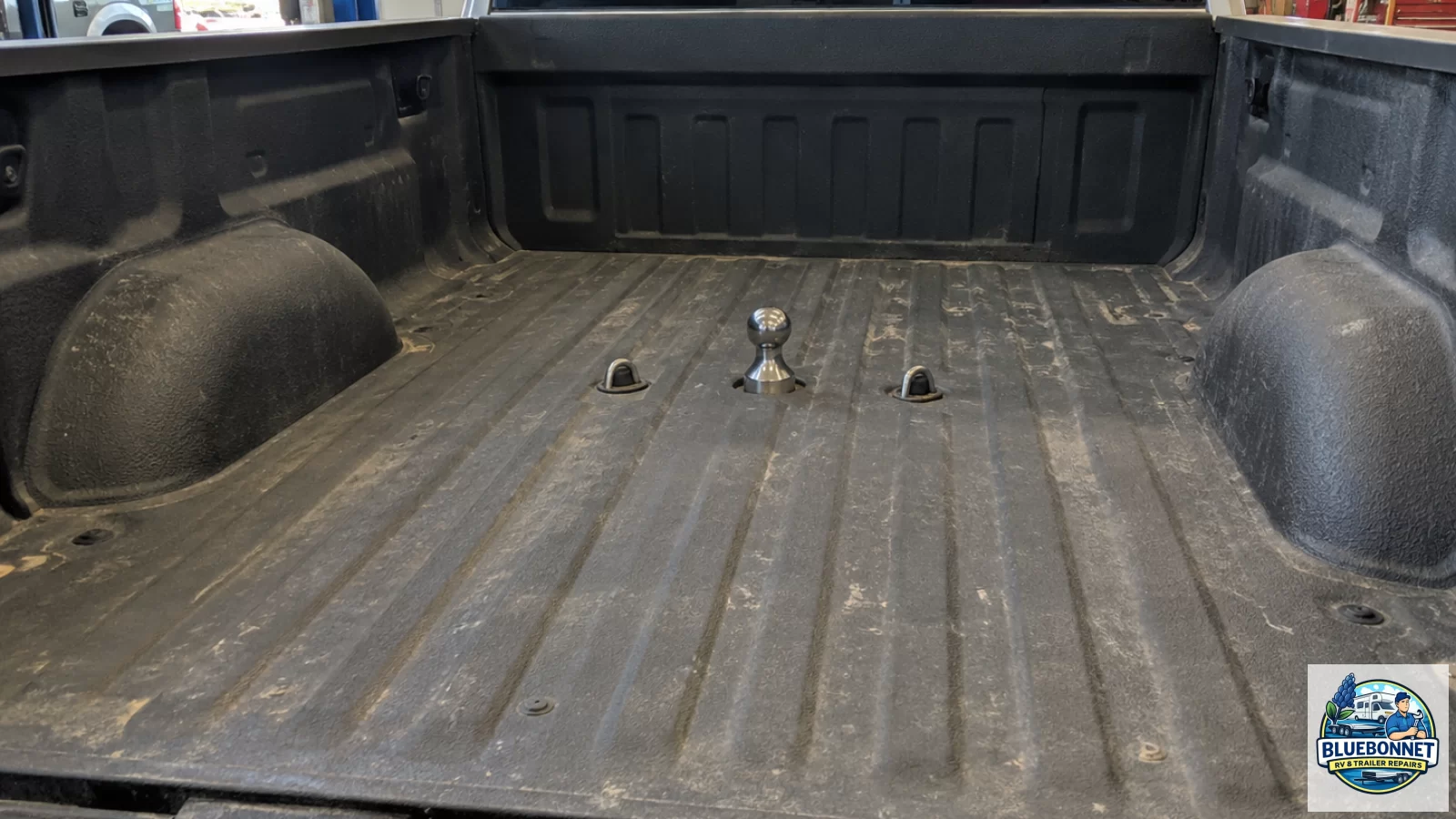
If you’re leaning gooseneck, BlueBonnet’s gooseneck hitch installation service is built around clean under-bed systems and correct ball placement so the setup tows predictably and keeps your bed usable.
What questions should you answer before you book an install?
- What trailer coupler type do I have (or plan to buy)?
- Is my truck payload sufficient for the real loaded pin/tongue weight?
- Do I need extra turning clearance (short bed, tight campgrounds)?
- Do I want a clean bed when I’m not towing?
- Do I have bed accessories that could interfere with hitch hardware?
When in doubt, get the truck + trailer measured together
The fastest way to avoid expensive rework is to match the hitch choice to your exact truck and trailer combination. A few measurements and a realistic conversation about how you tow can prevent clearance problems, uneven trailer attitude, and payload surprises.
If you want help choosing the right setup, call BlueBonnet RV & Trailer Repairs at (903) 804-6600 before you buy hardware. We’ll help you think through the fitment and towing geometry so you end up with a setup you trust.